1) Why Quthing matters
Documented: Quthing is a district in southern Lesotho, in the Maloti mountain belt. The archival record and site studies place San communities, Baphuthi leadership, and later Thembu movement histories in this same border zone.
Our hypothesis: I believe this is why Quthing is central in our clan memory. For us, many AmaQithi lines keep pointing back to this district.
2) The San chiefs of the caves
Documented: Soai (also written Soei) appears in written frontier material linked to Sehonghong. Qing is later tied to that line and to oral explanations of mountain art.
Oral tradition: Oral accounts place Chief Quu in this same mountain leadership world before or around Soai.
Oral tradition: Tradition also says Mokuoane, father of Moorosi, married Quu's sister. That is one core oral link for mixed San-Phuthi descent.
3) Moorosi and the Baphuthi-San friendship
Documented: Sehonghong (Mangolong) is a studied rock-art site. King and Challis (2017, p. 233) also record that San fighters fought with the Phuthi, and villagers replenished food on the mountain under cover of darkness.
Documented: The same literature records the mountain password as Moroa (Bushman), and places Basotho auxiliaries with the colonial side in the siege campaign (King and Challis 2017, pp. 232-233; Basutoland Records V references).
Oral tradition: Accounts hold that San and Phuthi households shared social life, including painting and refuge ties across the Quthing caves.
4) The Qithi connection: Qwabi
Documented baseline: By 1879, the mountain defense included San fighters and local villagers from the district. Recorded accounts also say Moshoeshoe I settled Quthing mainly with Bathepu people.
Documented linguistics: r-to-l shifts are common in cross-language naming in southern Africa, so Moorosi-to-Molosi is a plausible sound shift.
Our hypothesis: I believe Qwabiwas Bathepu, a Quthing Thembu in this local alliance world. I also believe his sons' names, Molosi and Bushman, preserve that memory.
5) The Thembu were in Lesotho too
Oral tradition:Thembu oral historians place Bhomoyi at Qacha's Nek and tie the praise uVela Bambhentsele to that period. The plain sense is an adult praise about women coming to him bare.
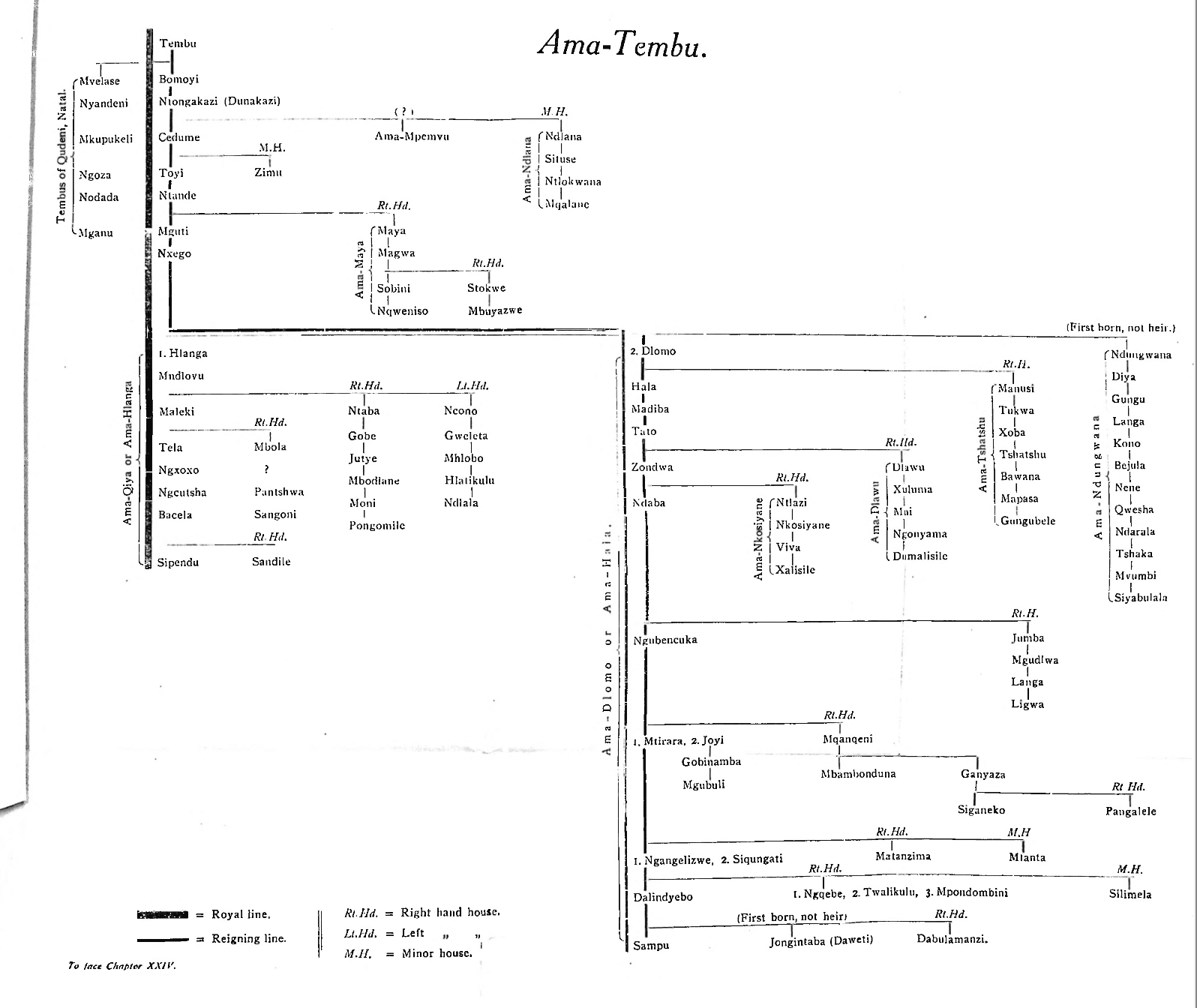
Oral tradition + documented: Oral lines place Mnguti as a Lesotho-to-South migration figure. In Soga's The South-Eastern Bantu, Mnguti and Maya are siblings, but oral accounts do not always agree on exact placement.
Documented counterweight: King and Challis (2017, p. 223) record that in 1829 Moorosi and Moshoeshoe I raided the Thembu of Ngubengcuka. That is why the later local Quthing Thembu alliance detail matters so much.
6) AmaQithi and AmaCube as an absorbed group
Oral tradition:Recorded Thembu oral history says Ntande's twins, Qithi and Cube, were born of commoner mothers and were accepted through black-cow slaughter rites.
Oral tradition:The same pattern is told earlier for Ndilo's commoner-house sons. That repetition is why we treat the rite as an incorporation pattern inside Thembu memory.
Documented cultural layer: ingqithi (the little-finger joint cut custom) is recorded as San-linked and later present in Thembu practice.
Our hypothesis: We read this as incorporation memory. We believe the lines folded into Thembu here included San-descended people from the Quthing frontier.
7) Closing: from Quthing to the White Kei
From the caves of Quthing, through the fall of the mountain in 1879, the trail runs south into Lady Frere and the White Kei basin. That is where Qwabi's sons raised families, and where these names stayed alive beside real rivers, hills, and villages.
Sources used for this page
Written sources
King, Rachel and Sam Challis, The 'Interior World' of the Nineteenth-Century Maloti-Drakensberg Mountains, The Journal of African History 58:2 (2017), pp. 223, 232-233 · Conz, Christopher R., Wisdom Does Not Live in One House (2017), p. 115 · Soga, The South-Eastern Bantu (Mnguti/Maya placement).
Oral history recordings
Family accounts
Qwabi family naming memory (Molosi and Bushman), Quthing-to-Lady Frere migration memory, and oral continuity across Mkapusi and nearby villages.